
Srirangapatna: Historic Island, Monuments and Travel Guide
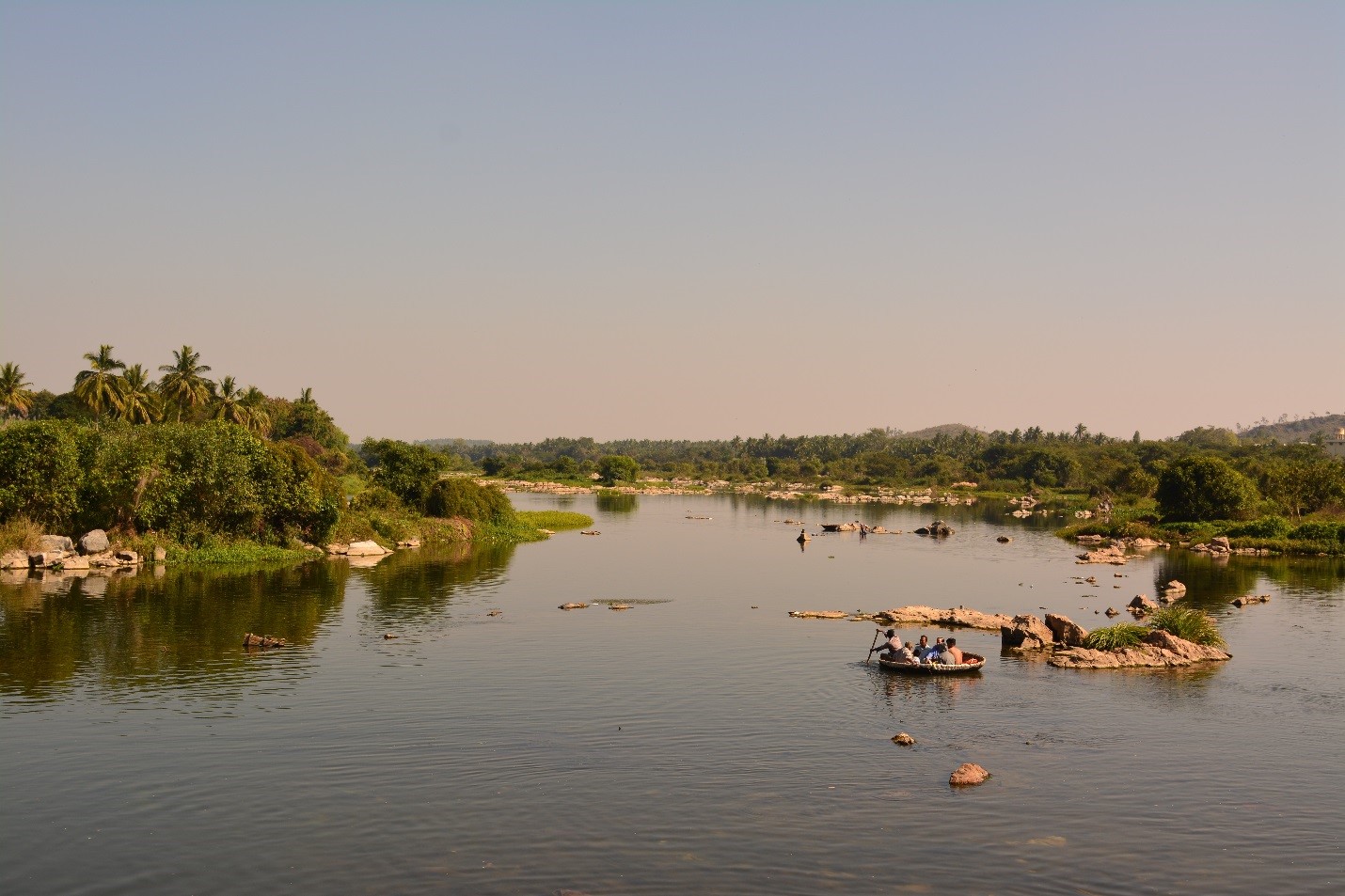
Srirangapatna is a historic town in Karnataka, located on an island formed by the River Cauvery, about 15 km from Mysuru. The river divides around the town and creates the distinctive island landscape that has shaped Srirangapatna’s history for centuries.
The island setting is one of the first things you notice about Srirangapatna, but the town is much more than a riverside destination. It has been an important centre of religion, politics and warfare, and was once the capital of the Mysore Kingdom under Tipu Sultan. Today, the town is known for its temples, forts, palaces, tombs and other historical structures spread across and around the island.
Srirangapatna is particularly associated with the history of Hyder Ali and Tipu Sultan and the Anglo-Mysore Wars. Tipu Sultan was killed here during the Battle of Srirangapatna in 1799, and several surviving monuments help tell the story of that period.
At the same time, Srirangapatna is not only about history. The Cauvery surrounds the town, with riverside spots, temples and quieter areas that make it an interesting place to explore at a slower pace.
If you are visiting from Mysuru or Bangalore, Srirangapatna can be explored as a day trip, although there is enough to see that it is worth setting aside most of a day rather than treating it as a quick stop.

Why Is Srirangapatna an Island?
Srirangapatna is a river island formed by the River Cauvery. Near the town, the Cauvery divides into two branches, commonly referred to as the North Cauvery and South Cauvery, creating the central landmass on which Srirangapatna stands.
The river is closely tied to the identity of Srirangapatna, and there is more to its geography than simply the island itself.
Pashchima Vahini
A little upstream of Srirangapatna, the Cauvery takes a westward turn before forming the island. This stretch of the river is known as Pashchima Vahini or Paschimavahini, meaning a westward-flowing course. The name is also associated with the riverside religious significance of the area.
Pashchima Vahini is a quieter part of the Srirangapatna region, where the Cauvery becomes an important part of the landscape as well as local religious life. It is worth including when exploring the riverine side of Srirangapatna rather than treating the town only as a collection of historical monuments.
Triveni Sangam
Further downstream, the two branches of the Cauvery meet again, while the Lokapavani River also joins the Cauvery in the area. This confluence is known as Triveni Sangam and is one of the better-known riverside places around Srirangapatna.
The confluence is visited for its religious significance as well as for the riverside setting. It is also a place where visitors can experience a quieter side of Srirangapatna away from its major historical monuments.
Why the River Was Important
The Cauvery did more than shape the geography of Srirangapatna. The river surrounding the town also provided a natural defensive advantage, helping make the island strategically important to the rulers who controlled it.
This combination of river, island and fortifications is an important part of understanding why Srirangapatna became such a significant political and military centre in the history of the Mysore Kingdom.
History of Srirangapatna
Srirangapatna has a long history, with the town and its island location playing an important role in the political and religious history of the region.
The settlement was associated with the Ganga dynasty in the early medieval period and later came under the influence of the Vijayanagara Empire. Its location on the Cauvery made the island strategically important as different kingdoms competed for control of the region.
Srirangapatna became particularly important during the rise of the Wodeyars of Mysore. It eventually became the capital of the Mysore Kingdom, a role that continued during the rule of Hyder Ali and his son Tipu Sultan.
Tipu Sultan made Srirangapatna the centre of his kingdom, and the town became an important military stronghold during the conflicts between Mysore and the British East India Company. Many of the structures that can still be seen around Srirangapatna date from this period.
The most significant turning point came in 1799, during the Fourth Anglo-Mysore War. The British East India Company and its allies attacked Srirangapatna, and Tipu Sultan was killed during the battle. The fall of the town brought the period of Tipu Sultan’s rule to an end and marked a major change in the history of the Mysore Kingdom.
Today, Srirangapatna’s historical importance can be seen across the island and its surrounding areas. Fortifications, palaces, tombs, temples, military structures and memorials are scattered around the town, making the town itself almost like an open-air history trail.
Some of the most important places associated with this history are Dariya Daulat Bagh, Gumbaz, Colonel Bailey’s Dungeon, Tipu Sultan’s Death Place and Srirangapatna Fort.
Dariya Daulat Bagh
Dariya Daulat Bagh is a historic garden on the banks of the Cauvery in Srirangapatna. The garden is home to Dariya Daulat Palace, the summer palace of Tipu Sultan.

The palace is built on a raised platform and has a distinctive rectangular design, with an open corridor running around the main structure. Teak pillars support the upper structure, while the walls and corridors are decorated with paintings depicting scenes from the period.
Today, the palace houses a museum with paintings, drawings, historical objects and other exhibits associated with Tipu Sultan and the history of the Mysore Kingdom.

One of the most interesting features of the palace is the artwork covering its walls and corridors. The paintings depict battles involving Hyder Ali and Tipu Sultan, royal courts and other historical figures and events. The artwork gives the building much more character than its relatively simple exterior might suggest.
The garden surrounding the palace also makes it a pleasant place to explore. Rather than treating the palace as an isolated monument, it is worth taking some time to walk through the grounds and appreciate its setting beside the Cauvery.
Dariya Daulat Bagh is one of the places I would keep aside some time for when exploring Srirangapatna, particularly if you are interested in the history of Tipu Sultan and the Mysore Kingdom.

Gumbaz
Gumbaz is a historic mausoleum and mosque complex in Srirangapatna, built by Tipu Sultan in memory of his father, Hyder Ali. It is located in a landscaped garden a short distance from Dariya Daulat Bagh.
The central mausoleum contains the cenotaphs of Hyder Ali, Tipu Sultan and Fatima Begum, Tipu Sultan’s mother. The structure stands on a raised stone platform and is surrounded by a pillared corridor, with a large dome forming its most prominent architectural feature.

The surrounding garden contains additional tombs and graves associated with members of the Mysore royal family and their relatives.
Next to the mausoleum is Masjid-e-Aqsa, a mosque associated with the complex. Together, the mausoleum, mosque and garden make Gumbaz one of the significant surviving monuments from the Tipu Sultan period in Srirangapatna.
The atmosphere here is quite different from the larger historical sites in the town. The combination of the symmetrical architecture, landscaped surroundings and historic significance makes Gumbaz worth including in a Srirangapatna visit.

Colonel Bailey’s Dungeon
Colonel Bailey’s Dungeon is an underground prison within the fortifications of Srirangapatna. It was used to imprison British officers and other prisoners of war captured during the Anglo-Mysore Wars. The dungeon is located below Sultan Bateri, a bastion on the northern side of the fort.

The dungeon is a large vaulted structure, measuring roughly 30.5 metres by 12.2 metres. Its most striking features are the series of arches supporting the roof and the stone slabs fixed along the walls. These slabs contain holes and fixtures that were used to chain prisoners.
The dungeon gets its name from Colonel William Baillie, a British officer captured during the Battle of Pollilur in 1780. He was imprisoned at Srirangapatna and died in captivity in 1782.
Life of a Prisoner
It is difficult to imagine what life must have been like for a prisoner inside this underground structure. The dungeon was not simply a place where prisoners were locked away. The stone fixtures along the walls show how prisoners could be restrained, limiting their ability to move freely.
Historical and local accounts also describe the dungeon being filled with water while prisoners were chained to the walls. Descriptions of the water level vary, with some accounts saying it reached the waist and others describing prisoners being immersed much higher. The structure also has an outlet associated with the drainage of water.

The conditions would have been particularly harsh in an enclosed underground space. Prisoners had little freedom of movement, were restrained for long periods and, according to these accounts, could be exposed to standing water as part of their confinement.
The surviving dungeon gives some physical context to these descriptions. The low vaulted interior, stone walls, chain fixtures and drainage arrangement are still visible today.
It is easy to imagine the harsh conditions described in historical accounts when you stand inside the dungeon today. The low vaulted interior, stone walls, chain fixtures and drainage arrangement give the place a stark atmosphere, and make Colonel Bailey’s Dungeon one of the more striking reminders of the conflicts that once took place around Srirangapatna.

Tipu Sultan’s Death Place
The Tipu Sultan Death Place marks the location where Tipu Sultan was killed during the Battle of Srirangapatna in 1799.
The battle was fought when the forces of the British East India Company and their allies attacked Srirangapatna, then the capital of Tipu Sultan’s kingdom. After fierce fighting around the fort, Tipu Sultan was killed near one of the gateways while defending the town.
A stone memorial now marks the spot. The location is modest compared with some of the larger monuments in Srirangapatna, but its historical importance is considerable. It was here that the rule of Tipu Sultan came to an end and the British and their allies took control of Srirangapatna.
For anyone exploring the history of Srirangapatna, this is worth visiting alongside the fort, Dariya Daulat Bagh and Colonel Bailey’s Dungeon. Seeing these places together gives a better sense of the events that unfolded during the final battle of 1799.

The Fort of Srirangapatna
There is no single preserved fort building or large gateway at Srirangapatna that you can visit in the way you would visit a standalone hill fort. Much of the present town itself lies within the area that was once protected by the fortifications.
The fort was built and strengthened over several periods, with the Cauvery providing a natural defensive barrier around the island. The fort had multiple defensive walls, bastions, gateways, armouries and other military structures. Much of this fortification has disappeared or survives only as broken walls and ruins.
Sri Ranganathaswamy Temple
The Sri Ranganathaswamy Temple is one of the most important religious landmarks in Srirangapatna. Dedicated to Lord Ranganatha, a reclining form of Lord Vishnu, the temple is located within the historic island town.
The temple has a long history that predates the Tipu Sultan period by many centuries. Successive rulers contributed to its development, and the temple became an important centre of the Vaishnavite tradition in the region.
The main deity is seen reclining on the serpent Adishesha, a form commonly associated with Lord Ranganatha. The temple complex contains several shrines, halls and sculpted pillars, reflecting the architectural changes made over different periods.
The temple is also closely connected with the identity of Srirangapatna itself. The name of the town comes from Sri Ranganatha, and the temple has remained an important religious centre even as the town around it changed through centuries of political and military history.
If you are exploring Srirangapatna, the temple provides a useful contrast to the monuments associated with Tipu Sultan. It shows that the history of the island is much older and broader than its role as the capital of the Mysore Kingdom.
Jama Masjid
Jama Masjid is one of the prominent historic mosques in Srirangapatna. The mosque is located within the old fortified town and is associated with the reign of Tipu Sultan.
The mosque is also known as Masjid-e-Ala. Its architecture includes a large prayer hall, two tall minarets and a spacious courtyard. The minarets are among the most recognisable features of the mosque and can be seen from different parts of the surrounding area.
The mosque was built during Tipu Sultan’s rule and remains an active place of worship. Its location within the old fort area makes it another reminder of the religious and political importance of Srirangapatna during the Mysore Kingdom.
It is worth seeing while exploring the historic centre of Srirangapatna, particularly because it can be combined naturally with the other monuments within the old town.
Karighatta View Point
Karighatta is a hill located near Srirangapatna, offering views over the surrounding countryside and the Cauvery river landscape. The hill is also known for the Sri Vaikunta Srinivasa Temple, dedicated to Lord Vishnu.
The temple sits on top of the hill and can be reached by climbing a long flight of steps. There is also a road leading towards the top, making it possible to reach the viewpoint without climbing all the way.
From the hilltop, you get a wider perspective of the landscape around Srirangapatna, including the river channels, agricultural fields and surrounding countryside. The views are particularly pleasant during and after the monsoon when the landscape is greener.
Karighatta is worth adding to a Srirangapatna itinerary if you want to see the town and its surroundings from above rather than only exploring its historical monuments.

Wellesley Bridge
Wellesley Bridge is a historic stone bridge across the Cauvery River near Srirangapatna. The bridge was built during the British period and is named after the Marquess Wellesley, who was Governor-General of India during the period of the Fourth Anglo-Mysore War.
The bridge is notable for its traditional construction, with large stone pillars and distinctive arches supporting the roadway. The Cauvery flowing beneath it adds to the character of the structure, making it an interesting stop while exploring the historic surroundings of Srirangapatna.
Unlike the palaces and monuments associated directly with Tipu Sultan, Wellesley Bridge represents a later phase in the history of the town. It is best seen as part of a wider exploration of Srirangapatna rather than as a major standalone attraction.
Garrison Cemetery
Garrison Cemetery is a historic British-era cemetery in Srirangapatna, containing the graves of British soldiers, officers and their families who were associated with the military presence in the region.
The cemetery dates from the period following the Anglo-Mysore conflicts and contains a number of old tombstones and memorials. The weathered gravestones and quiet surroundings offer a glimpse into another part of Srirangapatna’s colonial history, beyond the monuments associated with Tipu Sultan and the Mysore Kingdom.
It is a relatively quiet place and does not take long to explore. For those interested in the history of the Anglo-Mysore Wars and the British presence in Srirangapatna, it can be a worthwhile addition to the itinerary.
Obelisk
The Obelisk at Srirangapatna is a memorial commemorating the soldiers who lost their lives during the Battle of Srirangapatna in 1799. It stands near the site associated with the final battle of Tipu Sultan and the fall of Srirangapatna.
The simple stone monument was erected during the British period and records the names of British officers and soldiers who died during the battle. It is a reminder of the scale of the fighting that took place around the town at the end of the Fourth Anglo-Mysore War.
The Obelisk is a small stop rather than a major attraction, but it can be included while exploring the other historical sites around Srirangapatna.
How to Reach Srirangapatna
Srirangapatna is located about 15 km from Mysuru and is well connected by road and rail, making it an easy destination for a day trip.
By Road
The town lies on the Mysuru–Bengaluru highway (NH 275). From Mysuru, Srirangapatna can be reached in around 30 minutes by car, depending on traffic. From Bengaluru, the journey is considerably longer, but the town can still be visited as a day trip if you start early.
Regular buses also connect Srirangapatna with Mysuru and other nearby towns.
By Train
Srirangapatna Railway Station is on the Mysuru–Bengaluru railway line, with trains connecting the town to Mysuru and Bengaluru. Mysuru Junction has a much wider choice of trains, so travelling to Mysuru and continuing to Srirangapatna by road is another convenient option.
By Air
The nearest major airport is Mysuru Airport, although flight options are limited. Kempegowda International Airport in Bengaluru has a much wider choice of flights and can be used if you are travelling to Srirangapatna from elsewhere in India.
Once in Srirangapatna, most of the historical attractions can be covered by local transport or by hiring an auto-rickshaw or cab for the day.
How to Plan a Visit to Srirangapatna
Srirangapatna works well as a day trip from Mysuru/Bengaluru, especially if you are interested in history. The main attractions are spread around the old island, so it is better to plan the route rather than simply walk from one monument to another.
A full day gives you enough time to see the major historical sites without rushing. You can start with Dariya Daulat Bagh and Gumbaz, then explore the monuments around the old fort area, including Colonel Bailey’s Dungeon, Tipu Sultan’s Death Place, Sri Ranganathaswamy Temple and Jama Masjid.
You can then visit Karighatta for views of the surrounding landscape. If you have additional time, the Cauvery river areas and Triveni Sangam offer a change of scenery from the historical monuments.
If you are travelling from Bengaluru, Srirangapatna can also be combined with nearby attractions such as Ranganathittu Bird Sanctuary, Kokkare Bellur or Brindavan Gardens, depending on your interests and available time.
Since several of the important sites are outdoors, starting early is useful, particularly during the warmer months.
Best Time to Visit Srirangapatna
Srirangapatna can be visited throughout the year. The experience changes slightly with the seasons:
- Hot months: Start early in the day to comfortably explore the outdoor monuments.
- Rainy months: The Cauvery and surrounding landscape are greener and more scenic, though take care around the river.
- Cold months: Pleasant weather makes this a comfortable time to explore the town and cover several attractions in a day.
Travel Tips for Srirangapatna
- Start early: There are several places to see, and starting early makes it easier to cover the main attractions comfortably.
- Carry water: You may have to walk between some of the monuments, especially while exploring the historic town.
- Dress appropriately: Temples and religious sites require modest clothing.
- Be careful near the Cauvery: River conditions can change with the season, so avoid entering the water in unsafe areas.
- Keep a full day: If you want to see the major historical sites as well as the riverine areas, a full day is more comfortable than trying to rush through everything.




Social Presence!