


Kokkare Bellur, also spelled Kokrebellur, is a small village in Karnataka’s Mandya district, known for the large number of birds that visit and nest here every year.
The interesting thing about Kokkare Bellur is that this is not a conventional bird sanctuary. It is a living village where people and birds have coexisted for generations. The birds nest in trees around the village, while the residents continue with their everyday lives, farming and other activities.
The village gets its name from the Kannada word “Kokkare,” meaning stork, because of the large number of storks that traditionally visit the area. Along with storks, you can also spot pelicans, herons, parakeets and several other birds.


It is this unusual relationship between the villagers and the birds that makes a visit to Kokkare Bellur so interesting.
Why Is Kokkare Bellur Special?
Kokkare Bellur is different from a typical bird sanctuary because the birds are not confined to a protected park or separate forest area. They live alongside the villagers.
You can see birds nesting in trees around the village, including on trees close to houses and along the roads. The villagers have become accustomed to their seasonal visitors, and the birds are treated as an important part of village life.
There is also a practical relationship between the birds and the local community. Bird droppings are rich in nutrients and are traditionally valued by the villagers as natural manure for their agricultural fields.
This makes Kokkare Bellur particularly interesting. You are not simply visiting a place to watch birds; you are seeing an example of people and wildlife sharing the same living space.
The villagers have also observed that many birds return to the village year after year. Some are even believed to return to the same trees when the nesting season begins again.

Bird Season at Kokkare Bellur
The bird activity at Kokkare Bellur follows a seasonal pattern. The winged visitors generally begin arriving around October, after the monsoon, and their numbers increase over the following months.
The tamarind trees around the village are particularly popular nesting sites. As the season progresses, the trees can become crowded with birds, with several nests occupying the same tree.
By late winter, nesting activity becomes much more noticeable. February and March can be an especially interesting period to visit, when the birds are busy around their nests and adults can be seen carrying food for their young.
The nearby River Shimsha provides an important source of fish for the birds. You may see them flying between the river and their nesting areas carrying food back to their young.

Local residents have also observed interesting behaviour during the hotter months, including birds carrying water from the river towards their nests. As temperatures rise, some birds eventually leave the area and return during the next season.
The exact timing and number of birds can vary from year to year, but visiting during the main nesting season gives you a much better chance of seeing the village at its most active.
The villagers have a beautiful way of describing this relationship. Some consider the returning birds almost like their daughters — they arrive in the village, raise their young, and eventually leave again, only to return the following season.

How to Reach Kokkare Bellur
Kokkare Bellur is located in Mandya district, about 18 km from Maddur. It lies close to the Bengaluru–Mysuru route, making it a relatively easy detour if you are travelling between the two cities.
From Bengaluru
Kokkare Bellur is roughly 90 km from Bengaluru, depending on your starting point and the route you take. By road, you can travel towards Maddur and then take the road towards Kokkare Bellur.
The final stretch is through the countryside, and the village itself is quite different from a typical tourist attraction. You are essentially driving into a functioning village where the birds nest among the houses, trees and agricultural areas.
The turn towards Kokkare Bellur can be easy to miss if you are unfamiliar with the area, so it is a good idea to check the route on your navigation app before setting out.
By Bus
You can take a bus towards Maddur and then arrange local transport for the remaining distance to Kokkare Bellur. Since the village is about 18 km from Maddur, you should plan the last leg of the journey in advance rather than assuming frequent local transport will be available.
By Car or Bike
For a day trip from Bengaluru, travelling by your own car or bike is the simplest option. It also gives you more flexibility to explore the surrounding area and spend time in the village during the birding season.
The road from Maddur towards Kokkare Bellur passes through the countryside and follows the general course of the River Shimsha, a tributary of the Cauvery.
Kokkare Bellur Distance
Kokkare Bellur is located in Mandya district of Karnataka, about 18 km from Maddur. Maddur is the most useful reference point if you are approaching Kokkare Bellur from the Bengaluru–Mysuru route.
For visitors planning the trip from the larger cities, the approximate distances are:
| From | Approximate distance |
|---|---|
| Maddur | 18 km |
| Bengaluru | About 90 km |
| Mysuru | About 80–90 km |
The exact distance from Bengaluru or Mysuru will depend on your starting point and the route you take, so it is better to check the route before travelling rather than rely on a fixed kilometre figure.
Best Time to Visit Kokkare Bellur
The best time to visit Kokkare Bellur is during the bird nesting season, roughly from January to July. The exact timing can vary, but this is when the village sees its seasonal visitors and the nesting activity is at its peak.
Birds including pelicans and storks arrive around January and make nests in the trees around the village. As the season progresses, you can see the birds raising their young before they eventually leave the area ahead of the monsoon.
If your main interest is seeing the village at its busiest, visiting during the nesting and breeding period is preferable to visiting outside the migratory season.
The exact number of birds and the amount of activity can vary from year to year, so Kokkare Bellur is best approached as a natural bird habitat rather than a place with guaranteed sightings on a particular date.
Birds You Can See at Kokkare Bellur
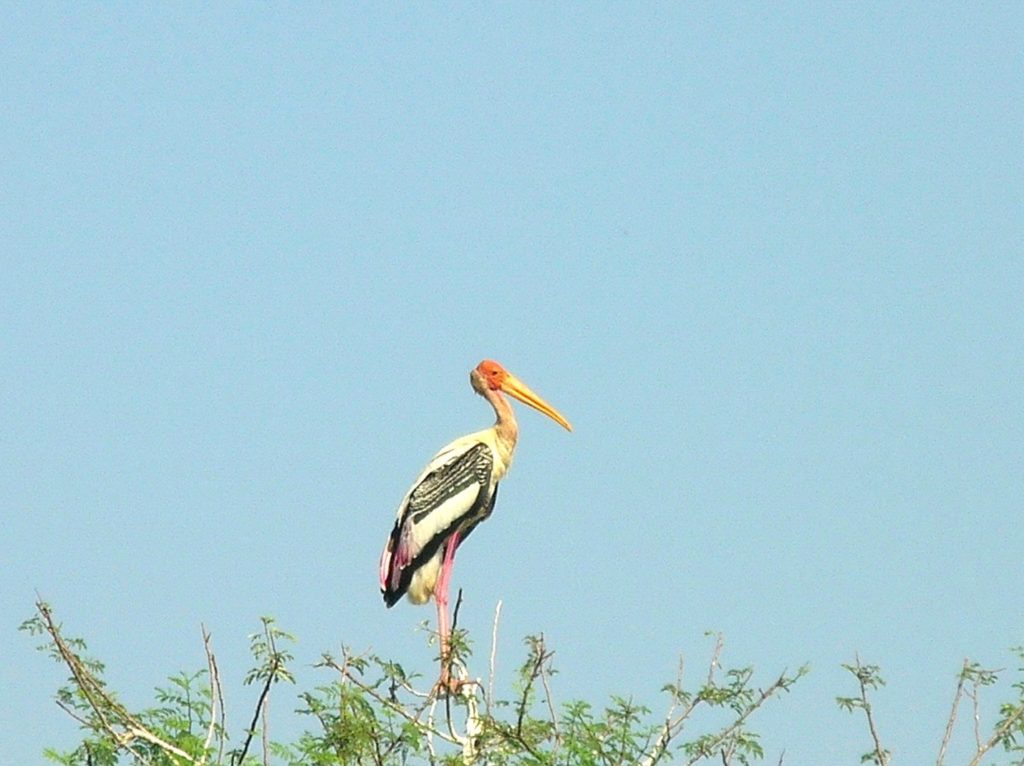
The most prominent birds at Kokkare Bellur are the Painted Storks and Spot-billed Pelicans that arrive during the nesting season. The village is particularly known for the birds that build their nests in the trees around the settlement.
You can also spot other birds around the village, including herons and parakeets, depending on the season.
What makes the birdwatching experience different here is that the birds are not restricted to a designated viewing area. They can be seen on trees, around houses, over the fields and flying above the village. The nesting trees can become particularly active when the birds are raising their young.
The exact birds and numbers you see will depend on the season and the activity in the village on the day of your visit. Rather than expecting a conventional bird sanctuary with marked trails and viewing points, it is better to explore Kokkare Bellur slowly and observe the birds as part of the village environment.
Kokkare Bellur as a Day Trip
Kokkare Bellur works well as a short excursion from Bengaluru or Mysuru, particularly if you are interested in birds and nature.
If you are travelling from Bengaluru, you can combine the visit with Ranganathittu Bird Sanctuary and other attractions around Srirangapatna. Ranganathittu is another important bird habitat in the region, although its setting is quite different from Kokkare Bellur.
You can also finish the day at Brindavan Gardens, especially if you want to see the gardens after sunset and catch the musical fountain. The gardens are located alongside KRS Dam and are another major attraction in the same broader region.
However, I would not try to rush through all three places. Kokkare Bellur is best experienced slowly, by walking around the village and observing the birds and their nesting trees. If bird activity is your main reason for visiting, give the village enough time rather than treating it as a quick roadside stop.
A simple itinerary could therefore be:
Bengaluru → Kokkare Bellur → Ranganathittu → Brindavan Gardens → Bengaluru
If starting from Mysuru, Kokkare Bellur can instead be treated as a half-day excursion and combined with other attractions around Srirangapatna.
