
Rani Ki Vav, Patan – The Magnificent Queen’s Stepwell of Gujarat
Hidden beneath the plains of Patan lies one of India’s greatest architectural masterpieces. At first glance, Rani Ki Vav appears to be an ordinary stepwell. But as you descend level by level, it gradually reveals itself as an underground palace filled with hundreds of exquisitely carved sculptures, ornate pillars and beautifully designed corridors.
Built more than 900 years ago, Rani Ki Vav (Queen’s Stepwell) is regarded as the finest stepwell in India and is recognised as a UNESCO World Heritage Site. Unlike most stepwells that were built primarily to store water, Rani Ki Vav was designed as both a practical water reservoir and a spectacular monument celebrating art, architecture and spirituality.
Today, it stands as one of Gujarat’s most remarkable historical attractions and is a must-visit for anyone interested in India’s medieval heritage.
History of Rani Ki Vav
Rani Ki Vav was commissioned during the 11th century by Queen Udayamati in memory of her husband, King Bhimdev I (Bhimadeva I) of the Solanki dynasty.
The Solankis ruled large parts of Gujarat during a period often regarded as the golden age of architecture in western India. Their patronage resulted in magnificent temples, reservoirs and stepwells, of which Rani Ki Vav remains the finest surviving example.
Over the centuries, repeated floods from the nearby Saraswati River buried the entire structure beneath layers of silt. Ironically, this natural burial protected many of its intricate carvings from weathering and destruction.
The Archaeological Survey of India began extensive excavation and restoration during the twentieth century, gradually uncovering one of the best-preserved stepwells ever discovered.
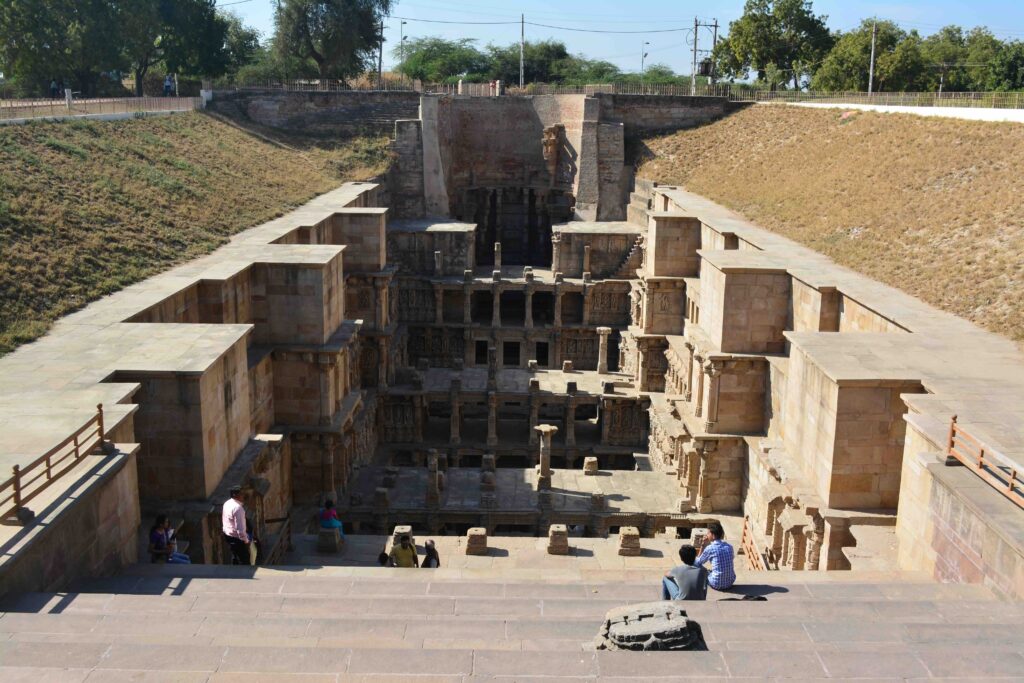
In recognition of its exceptional cultural significance, Rani Ki Vav was inscribed as a UNESCO World Heritage Site in 2014.
While the history of Rani Ki Vav explains why it was built, its true magnificence becomes evident only when you begin descending through its seven beautifully sculpted levels.
Why Was Rani Ki Vav Built?
Stepwells were essential in western India, where water shortages were common.
Besides storing water throughout the year, they also served as:
- community gathering spaces
- resting places for travellers
- centres for religious worship
- shelters from the intense summer heat
Rani Ki Vav elevated this practical concept into an architectural masterpiece by combining engineering with extraordinary artistic detail.
Symbolism of Stepwells in Indian Architecture
Stepwells in western India were much more than structures built to store water. In Hindu philosophy, water symbolises life, purity and spiritual renewal. Descending into a stepwell was often seen as a symbolic journey from the earthly world towards the sacred.
Unlike temples that rise towards the sky, stepwells lead visitors underground. Each level gradually takes you deeper, both physically and spiritually, before finally reaching the life-giving water below. This unique concept transformed a practical engineering structure into a place of reflection and worship.
Rani Ki Vav is considered the finest example of this philosophy. Every staircase, pillar and sculpture has been carefully designed so that the monument feels like an inverted temple, where visitors descend instead of climb.
Architecture of Rani Ki Vav
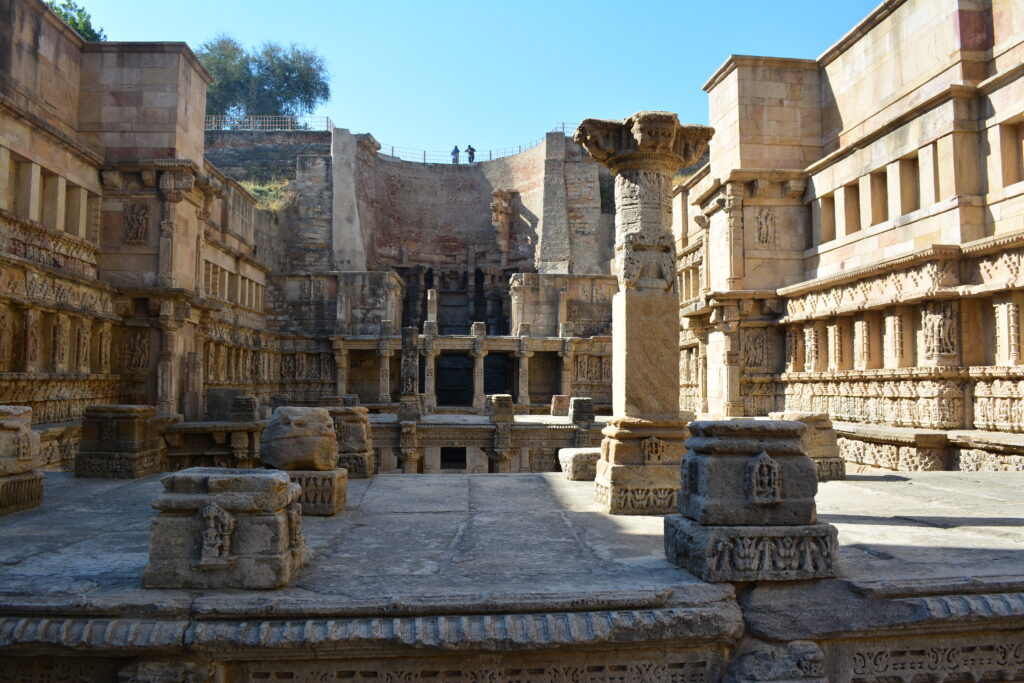
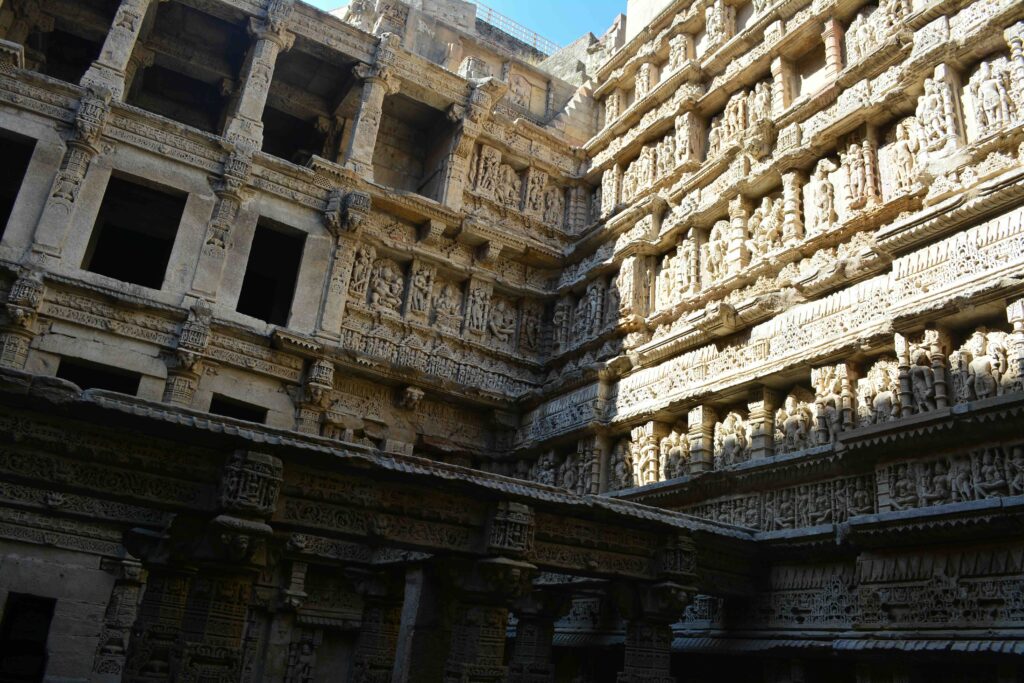
Rani Ki Vav stretches nearly 65 metres in length, around 20 metres in width, and descends approximately 27 metres below ground level.
The structure consists of seven levels, connected by broad staircases leading visitors towards the well at the far end.
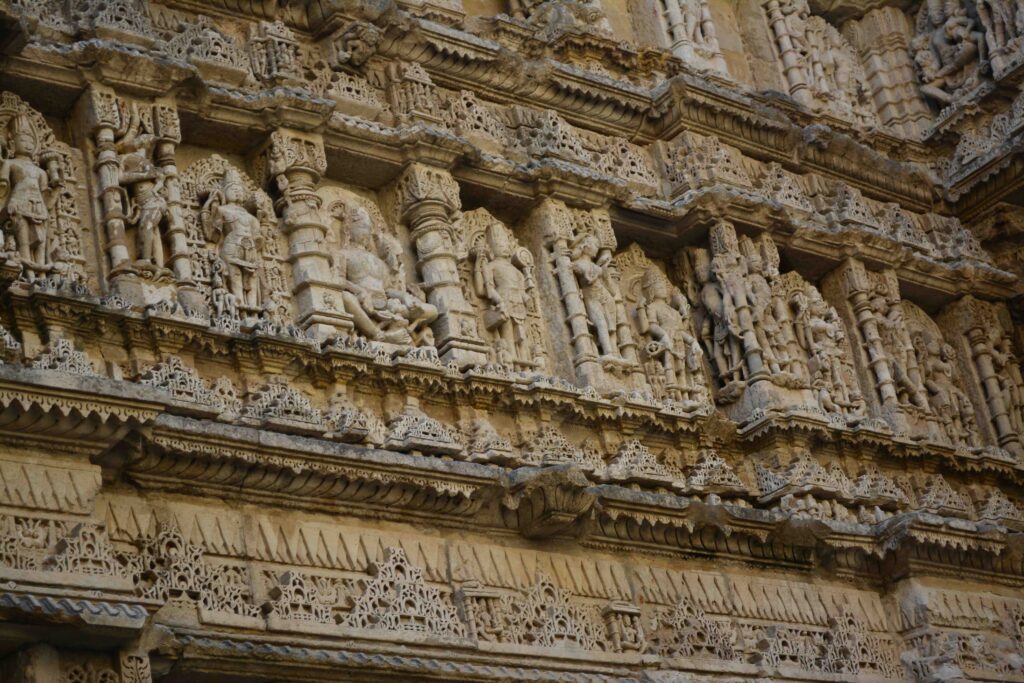
As you descend deeper, the carvings become increasingly elaborate.
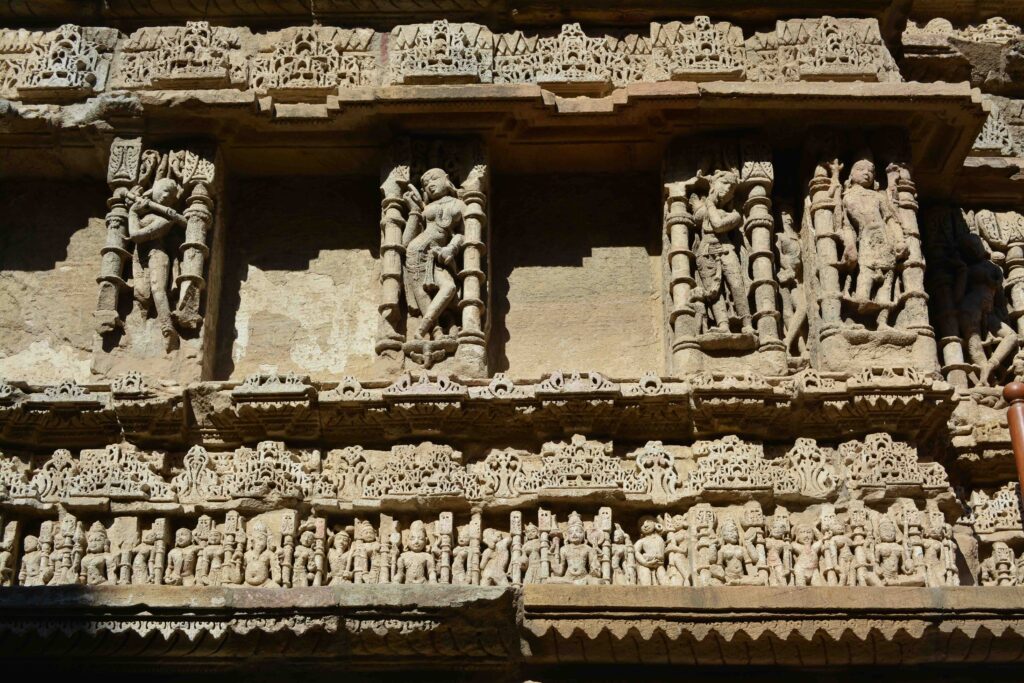
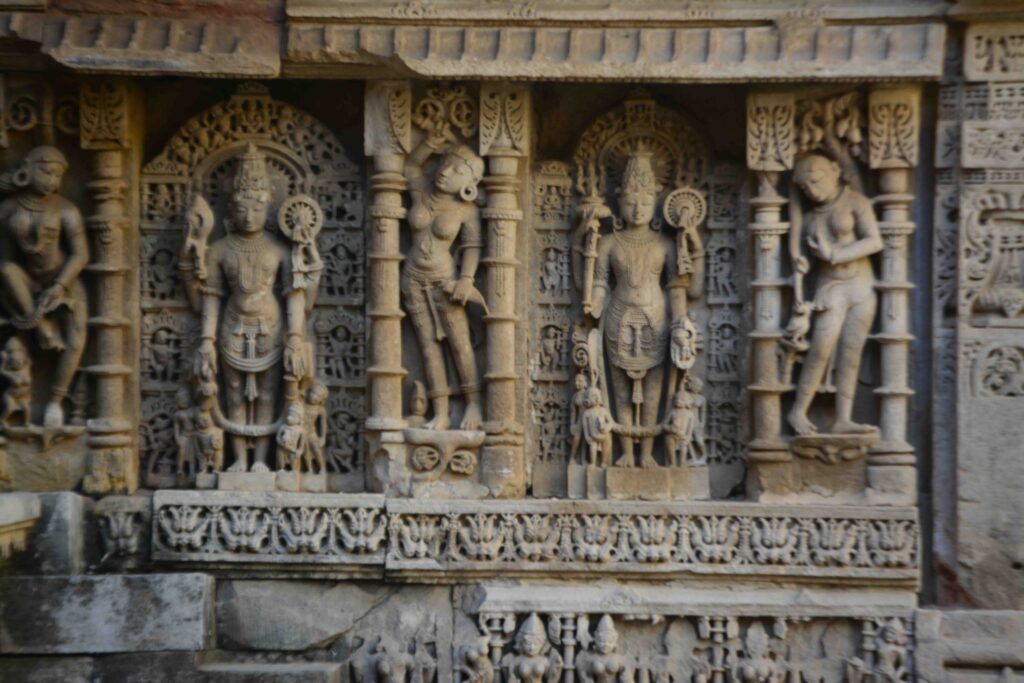
More than 500 principal sculptures and over 1,000 smaller carvings decorate the walls, pillars and niches throughout the monument.
Every level demonstrates exceptional craftsmanship, making it feel less like a water reservoir and more like an underground temple.
Sculptures and Carvings
One of the biggest highlights of Rani Ki Vav is its extraordinary collection of sculptures.
The carvings depict:
- Lord Vishnu in various incarnations (Dashavatara)
- Shiva
- Brahma
- Goddess Lakshmi
- Goddess Durga
- celestial beings (Apsaras)
- sages
- musicians
- dancers
- scenes from Hindu mythology
Many sculptures also portray everyday life during the Solanki period, offering fascinating insights into medieval Gujarat.
The carvings remain astonishingly well preserved despite being nearly a thousand years old.
Dashavatara – The Ten Incarnations of Vishnu
Among the hundreds of sculptures inside Rani Ki Vav, the carvings of Lord Vishnu’s Dashavatara (Ten Incarnations) are considered the most remarkable.
Visitors can identify beautifully sculpted representations of:
- Matsya (Fish)
- Kurma (Tortoise)
- Varaha (Boar)
- Narasimha (Man-Lion)
- Vamana (Dwarf)
- Parashurama
- Rama
- Krishna
- Buddha (in some interpretations)
- Kalki
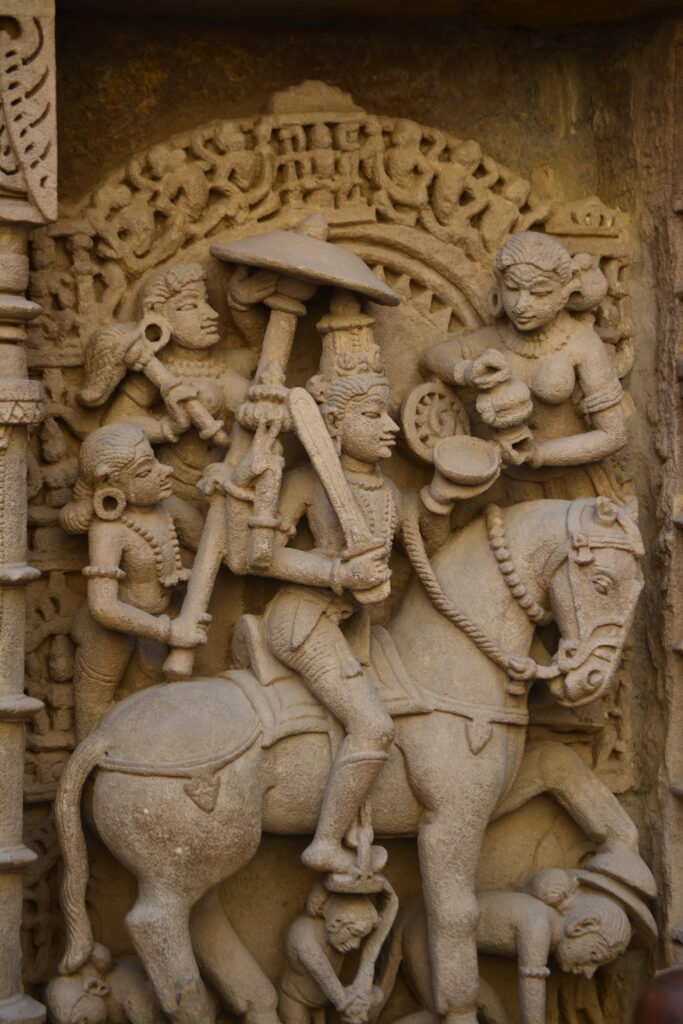
These sculptures are not merely decorative. Together, they symbolise the preservation of cosmic order, making Lord Vishnu an appropriate deity for a monument associated with the preservation of water—the source of life itself.
The quality of these carvings demonstrates the extraordinary skill of Solanki artisans, many of whose works continue to survive nearly a thousand years later.
Engineering Behind the Stepwell
Beyond its artistic beauty, Rani Ki Vav is also an engineering marvel.
The stepwell was designed to:
- harvest rainwater
- recharge groundwater
- provide access to water throughout the year
- naturally cool the surrounding environment
Its orientation and underground design kept temperatures considerably lower than the outside, making it a comfortable gathering place even during Gujarat’s hot summers.
The monument perfectly illustrates how ancient Indian engineers combined functionality with aesthetics.
UNESCO World Heritage Site
In 2014, UNESCO recognised Rani Ki Vav as a World Heritage Site for its outstanding architecture and engineering.
UNESCO described it as one of the finest examples of stepwell construction, representing the pinnacle of subterranean architecture in India.
Today, it is considered one of Gujarat’s most important cultural landmarks.
Interesting Facts About Rani Ki Vav
- Built in the 11th century by Queen Udayamati.
- Dedicated to the memory of King Bhimdev I.
- More than 500 major sculptures adorn the monument.
- Buried under silt for centuries before being rediscovered.
- Declared a UNESCO World Heritage Site in 2014.
- Featured on the ₹100 Indian currency note.
Why is Rani Ki Vav Featured on the ₹100 Currency Note?
In 2018, the Reserve Bank of India selected Rani Ki Vav to appear on the reverse side of the redesigned ₹100 banknote.
The monument was chosen because it represents India’s rich architectural heritage, exceptional craftsmanship and advanced engineering traditions. Featuring a UNESCO World Heritage Site on the currency also highlights the importance of preserving the country’s historical monuments for future generations.
Today, many visitors are surprised to recognise the monument after seeing it on the ₹100 note, making it one of India’s most recognisable archaeological sites.
Timings & Entry Fee
| Information | Details |
|---|---|
| Timings | 8:00 AM – 6:00 PM |
| Closed | Open all days |
| Indian Citizens | ASI entry fee applicable |
| Foreign Nationals | Separate ASI ticket |
| Time Required | 1.5–2 hours |
| Photography | Allowed |
Best Time to Visit
The ideal time to visit is from October to March, when temperatures are pleasant.
Morning visits offer softer light for photography, while late afternoons are ideal for exploring comfortably.
Distance from Nearby Places
| Place | Distance |
|---|---|
| Sahasralinga Talav | 1 km |
| Patan Bus Stand | 2 km |
| Patola House Museum | 3 km |
| Modhera Sun Temple | 35 km |
| Ahmedabad | 128 km |
| Gandhinagar | 118 km |
Nearby Places to Visit
Sahasralinga Talav
Just a kilometre away, Sahasralinga Talav showcases the remarkable water management system developed by the Solanki rulers and perfectly complements a visit to Rani Ki Vav.
Modhera Sun Temple
One of India’s finest Sun Temples, Modhera is renowned for its magnificent Surya Kund, intricate carvings and astronomical alignment.
Patola House Museum
Learn about the centuries-old tradition of Patola silk weaving, one of Gujarat’s most celebrated textile arts.
Which Heritage Site Should You Visit?
| Attraction | Famous For | Time Required |
|---|---|---|
| Rani Ki Vav | UNESCO stepwell and sculptures | 1.5–2 hrs |
| Modhera Sun Temple | Sun Temple and Surya Kund | 1.5 hrs |
| Sahasralinga Talav | Ancient water management system | 30–45 mins |
| Adalaj Stepwell | Indo-Islamic architecture | 45–60 mins |
How to Reach Rani Ki Vav
Rani Ki Vav is located in Patan, around 130 km from Ahmedabad.
Visitors can reach Patan by:
- Gujarat State Transport buses
- Private taxis
- Self-drive cars
Most travellers combine Rani Ki Vav with:
- Modhera Sun Temple
- Sahasralinga Talav
making it an excellent full-day heritage circuit from Ahmedabad.
Suggested One-Day Itinerary from Ahmedabad
A perfect heritage day trip includes:
Ahmedabad → Adalaj Stepwell → Modhera Sun Temple → Rani Ki Vav → Sahasralinga Talav → Ahmedabad
This itinerary showcases some of Gujarat’s finest examples of medieval architecture, engineering and water conservation.
Photography Tips
Rani Ki Vav is one of the most photogenic heritage monuments in Gujarat. The best photographs are often captured by combining the monument’s symmetry with its intricate carvings.
Some of the best viewpoints include:
- The first panoramic view from the entrance.
- Looking down through the multiple terraces.
- The richly carved pillars along the lower levels.
- Close-up shots of the Dashavatara sculptures.
- The geometric symmetry created by the staircases.
Morning light usually produces softer shadows and fewer crowds, making it an ideal time for photography.
Travel Tips
- Arrive early to avoid crowds.
- Wear comfortable walking shoes.
- Carry water during summer.
- Allow at least two hours to appreciate the carvings.
- Don’t rush to the well—each level reveals new sculptures worth exploring.
- Combine the visit with nearby Sahasralinga Talav and Modhera Sun Temple.
Related Guides
Explore Gujarat’s Finest Heritage Sites
Planning to explore Gujarat beyond Ahmedabad? A Saurashtra Tour with Gir and Diu combines iconic heritage sites, temples, wildlife and coastal attractions into a well-planned itinerary. If you’re looking for a hassle-free way to experience destinations like Dwarka, Somnath, Gir National Park and Diu along with Gujarat’s rich history, consider exploring our curated Gujarat tour packages.



Social Presence!