


Located on the banks of the Pushpavati River, about 100 km from Ahmedabad, the Modhera Sun Temple is one of the finest examples of temple architecture in India. Built during the reign of King Bhima I (Bhimdev I) of the Solanki dynasty in 1026–1027 AD, this magnificent monument was dedicated to Surya, the Sun God.


Although no prayers are offered here today, the temple continues to amaze visitors with its breathtaking architecture, intricate carvings, and remarkable astronomical precision. It was designed so that the first rays of the rising sun illuminated the idol of Surya on the equinoxes, showcasing the advanced knowledge of astronomy possessed by its builders over a thousand years ago.
Unlike many heritage monuments where history alone attracts visitors, Modhera offers an unforgettable combination of mythology, engineering, art, and storytelling. Together with Rani Ki Vav, Sahasralinga Talav, and Adalaj Stepwell, it forms one of the finest heritage circuits in Gujarat.
Why Visit Modhera Sun Temple?
Even if you have visited famous temples like Konark or Khajuraho, Modhera offers a completely different experience. The temple is no longer an active place of worship, allowing visitors to freely admire every sculpture, carving, and architectural detail without disturbing religious rituals.
Reasons to visit include:
- One of India’s finest surviving Sun Temples
- Magnificent 11th-century Solanki architecture
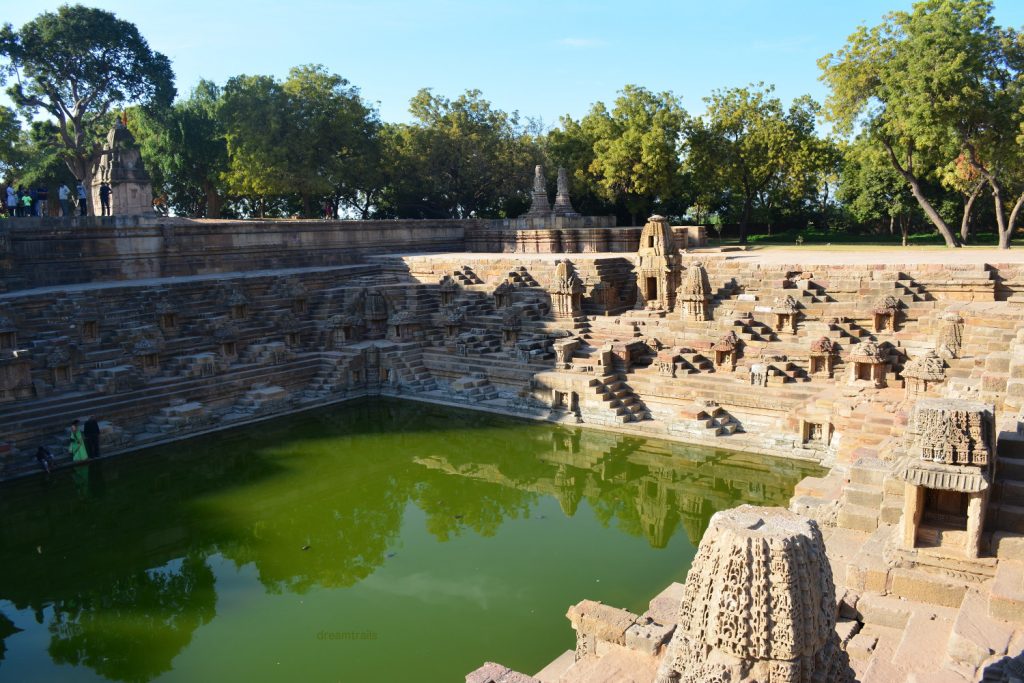
- Spectacular Surya Kund with 108 shrines
- Fascinating astronomical alignment with the rising sun
- Beautiful carvings depicting scenes from Hindu mythology
- Excellent destination for photographers and architecture lovers
- Ideal day trip from Ahmedabad
The beautifully maintained gardens surrounding the monument further enhance its charm and make it one of Gujarat’s most enjoyable heritage sites to explore.

History of Modhera Sun Temple
The Sun Temple was commissioned by King Bhima I of the Solanki dynasty, who ruled large parts of present-day Gujarat during the 11th century. The Solanki rulers considered themselves Suryavanshis, or descendants of the Sun God, making Surya one of their principal deities.
The temple was therefore constructed not merely as a place of worship but also as a celebration of the dynasty’s devotion to Surya.
Like many magnificent temples of western India, Modhera witnessed periods of invasion and destruction over the centuries. Historians believe the temple suffered damage during successive invasions following the early 11th century, resulting in the loss of its original idol and much of its wealth.
Today, the temple no longer functions as an active place of worship. Instead, it is a protected monument maintained by the Archaeological Survey of India (ASI), allowing visitors to appreciate one of India’s greatest architectural achievements in its preserved form.
My First Impression of Modhera Sun Temple
Until my visit, I had never heard much about Modhera Sun Temple. Our driver suggested adding it to the itinerary while we were visiting Rani Ki Vav and Sahasralinga Talav, and I accepted without really knowing what to expect.
As I stepped out of the car, the first thing that caught my attention was not the temple itself, but the beautifully maintained gardens surrounding it. Wide paved walkways, lush green lawns, and the peaceful atmosphere immediately made the place feel different from most historical monuments.
From a distance, the temple looked elegant but understated. There was nothing to indicate the extraordinary engineering hidden within. It was only as I walked closer that the intricate carvings, the perfectly proportioned structures, and eventually the magnificent Surya Kund began revealing why Modhera is regarded as one of India’s greatest architectural masterpieces.
Architecture of Modhera Sun Temple
The Modhera Sun Temple is not a single structure but a carefully planned architectural complex consisting of three major components:
- Surya Kund (Rama Kund)
- Sabha Mandap (Assembly Hall)
- Guda Mandap (Sanctum Sanctorum)
These three structures are arranged along a common east-west axis, allowing visitors to gradually progress from the sacred water tank towards the main shrine.

What makes the temple particularly fascinating is the amount of symbolism incorporated into its design. Numbers, geometry, astronomy, mythology, and engineering all come together to create a monument that was centuries ahead of its time.
Surya Kund (Rama Kund)
The first structure visitors encounter is the magnificent Surya Kund, also known as Rama Kund.
This enormous rectangular water tank is one of the most beautiful parts of the entire temple complex. In ancient times, devotees were expected to purify themselves by taking a ritual bath before entering the temple, and Surya Kund served exactly that purpose.
Unlike an ordinary pond, the tank itself is an architectural masterpiece.
Hundreds of beautifully designed steps descend symmetrically towards the water, creating geometric patterns that almost resemble Gujarat’s famous stepwells. Looking down from the top, the symmetry is simply breathtaking.

As I walked around the tank, I found myself spending far more time here than I had expected. Every angle revealed a different pattern of steps, while the reflections of the temple in the water created wonderful photographic opportunities.
The guide accompanying us mentioned that the tank contains 108 miniature shrines, a number considered sacred in Hinduism. Each shrine is dedicated to different deities, including Lord Vishnu, Lord Shiva, Lord Ganesha, and Shitala Mata, among others.


Standing among these centuries-old shrines, one cannot help but admire the level of craftsmanship achieved over a thousand years ago.
Although the water today is not suitable for ritual bathing, it is easy to imagine how pilgrims would once descend these beautifully carved steps before offering prayers inside the temple.
One side of the tank leads directly towards the Sabha Mandap through two elegant Toranas (ornamental gateways), marking the transition from the world of water purification to the sacred temple complex.

Sabha Mandap – The Assembly Hall
Beyond the Surya Kund stands the beautifully carved Sabha Mandap, or Assembly Hall.
Unlike the enclosed sanctum, this octagonal hall is open from all sides and was designed as a gathering place for religious ceremonies, discourses, and community meetings.
The ceiling of the Sabha Mandap rests upon 52 intricately carved pillars, each symbolising one week of the year. Every pillar is richly decorated with scenes from Hindu mythology, making it impossible to appreciate all the details in a single visit.

As you slowly walk around the hall, you’ll notice sculptures depicting episodes from the Ramayana, Mahabharata, and the life of Lord Krishna. Other carvings portray deities such as Agni, the God of Fire, and Varuna, the God of Water, reflecting the artistic richness of the Solanki period.
One detail that particularly fascinated me lies near the base of the outer walls.

Small sculptures of elephants run continuously around the Sabha Mandap. There are believed to be 365 elephants, representing the 365 days of the year. It is incredible to think that such symbolic details were carefully incorporated into the architecture over a thousand years ago.

Standing inside the Sabha Mandap, surrounded by elaborately carved pillars and looking back towards the magnificent Surya Kund, was easily one of the highlights of my visit. It is here that one truly begins to appreciate the extraordinary artistic vision of the craftsmen who built this monument.


Guda Mandap – The Sanctum of the Sun God
The Guda Mandap was the most sacred part of the Modhera Sun Temple and housed the original idol of Surya, the Sun God.
Unlike the open Sabha Mandap, this structure was designed as the innermost sanctum where only priests and devotees performing rituals could enter. Although the idol is no longer present today, the sanctum still gives visitors an idea of the grandeur that once existed here.
According to local tradition, the sanctum contained a ten-foot-deep chamber filled with gold and silver, over which stood a magnificent idol of Surya made entirely of gold. The deity was depicted riding a chariot drawn by seven horses, symbolising the seven days of the week. Some legends even mention that the idol had a precious diamond embedded at the position of the third eye.

Whether every detail of these stories is historically accurate or not, they illustrate the immense wealth and importance of the temple during the Solanki period.
Over the centuries, repeated invasions resulted in the destruction of the idol and much of the temple’s treasures. Today, the sanctum stands empty, allowing visitors to admire the remarkable craftsmanship that has survived for nearly a thousand years.

Walking around the exterior of the Guda Mandap is just as rewarding as exploring its interior. Every wall is covered with exquisitely carved sculptures depicting gods, goddesses, celestial beings, musicians, dancers, scenes from the Ramayana and Mahabharata, and even different stages of human life—from birth to death.
It is difficult to believe that every sculpture was carved by hand more than a thousand years ago.

The Science Behind Modhera Sun Temple
One of the reasons Modhera Sun Temple fascinates historians and architects alike is the remarkable understanding of astronomy demonstrated by its builders.
The temple faces east and was carefully aligned so that the first rays of the rising sun on the equinoxes illuminated the idol of Surya inside the sanctum.
On these two days each year, day and night are nearly equal in duration across much of the world. The architects used this astronomical event to create a spectacular visual effect inside the temple, symbolising the divine connection between the Sun God and the monument dedicated to him.
Although the original idol no longer exists, this alignment remains one of the most remarkable engineering achievements of medieval India.
The temple also lies close to the Tropic of Cancer, further highlighting the careful consideration given to its geographical location during planning.
Fascinating Facts About Modhera Sun Temple
The deeper you explore Modhera, the more you realise that almost every part of the monument has a symbolic meaning.
108 Shrines Around Surya Kund
The Surya Kund contains 108 small shrines, a sacred number in Hinduism. The number 108 appears repeatedly in Indian philosophy, meditation, astronomy, and temple architecture, making it one of the most spiritually significant numbers in the religion.

Seven Horses of the Sun God
The original idol of Surya depicted the deity riding a chariot pulled by seven horses, representing the seven days of the week and the continuous passage of time.
52 Pillars
The Sabha Mandap is supported by 52 beautifully carved pillars, each representing one week of the year.

365 Elephant Sculptures
The exterior walls contain 365 carved elephants, symbolising the 365 days of the year. These elephants not only support the decorative panels visually but also demonstrate how time itself was woven into the architecture.
Astronomical Alignment
The sanctum was positioned so that the first rays of the rising sun on the equinoxes entered the temple and illuminated the idol of Surya.
More than a thousand years later, this continues to be one of the finest examples of astronomical planning in Indian temple architecture.
Timings, Entry Fee & Visitor Information
| Information | Details |
|---|---|
| Timings | 8:00 AM – 6:00 PM |
| Entry Fee | Free |
| Time Required | 1.5 to 2 hours |
| Managed By | Archaeological Survey of India (ASI) |
| Photography | Allowed |
(Timings may change slightly during special events.)
Best Time to Visit Modhera Sun Temple
The best time to visit is between October and March, when Gujarat experiences pleasant weather.
Early mornings and late afternoons are particularly rewarding, as the soft sunlight beautifully highlights the intricate carvings across the temple complex.
If possible, avoid visiting during the peak afternoon hours in summer, as temperatures can become quite high.

Photography Tips
Modhera Sun Temple is one of Gujarat’s most photogenic monuments.
Some of the best viewpoints include:
- The symmetrical steps of Surya Kund.
- The Toranas leading towards the Sabha Mandap.
- Wide-angle shots of the entire temple complex.
- Detailed carvings on the pillars.
- Exterior sculptures of the Guda Mandap.
- Reflections in Surya Kund during calm weather.
Because no religious ceremonies take place inside the monument, visitors usually have enough time to photograph the architecture without disturbing worshippers.
Distance From Nearby Places
| Destination | Approximate Distance |
| Ahmedabad | 100 km |
| Gandhinagar | 90 km |
| Patan | 35 km |
| Rani Ki Vav | 36 km |
| Sahasralinga Talav | 38 km |
| Adalaj Stepwell | 85 km |
Suggested One-Day Heritage Trip from Ahmedabad
If you are hiring a private vehicle from Ahmedabad, Modhera Sun Temple can easily be combined with some of Gujarat’s finest heritage attractions.
Suggested itinerary:
Ahmedabad → Adalaj Stepwell → Modhera Sun Temple → Rani Ki Vav → Sahasralinga Talav → Ahmedabad
This circuit showcases the architectural brilliance of the Solanki period and comfortably fits into a full-day road trip.
Nearby Places to Visit
Rani Ki Vav
A UNESCO World Heritage Site in Patan, Rani Ki Vav is widely regarded as the finest stepwell in India and is famous for its extraordinary sculptures and seven levels of intricate carvings.
Sahasralinga Talav
Built during the Solanki period, Sahasralinga Talav is an impressive medieval water reservoir that once supplied water to Patan and remains an important archaeological site today.
Adalaj Stepwell
One of Gujarat’s most beautiful stepwells, Adalaj combines remarkable engineering with Indo-Islamic architecture and the legendary story of Queen Rani Roopba.
Ahmedabad
Ahmedabad serves as the perfect base for exploring these heritage monuments and offers attractions such as Sabarmati Ashram, Adalaj Stepwell, bustling markets, and excellent Gujarati cuisine.
Travel Tips
- Visit early in the morning for the best light and fewer visitors.
- Wear comfortable footwear, as you’ll spend considerable time exploring the temple complex.
- Carry drinking water, especially during summer.
- Take time to walk around all three structures instead of heading directly to the main temple.
- Don’t miss the intricate carvings on the outer walls—they are among the finest in Gujarat.
- A local guide can greatly enhance the visit by explaining the symbolism behind the sculptures and architecture.
Why Modhera Sun Temple Should Be On Your Gujarat Itinerary
Even after visiting countless temples across India, Modhera left a lasting impression on me.
It isn’t merely another ancient monument. It is a remarkable combination of architecture, mythology, astronomy, engineering, and artistic excellence—all brought together more than a thousand years ago.
Standing beside the perfectly symmetrical Surya Kund, walking through the beautifully carved Sabha Mandap, and finally reaching the silent sanctum of the Guda Mandap, it becomes easy to understand why Modhera is considered one of Gujarat’s greatest architectural treasures.
If you are exploring Gujarat’s rich heritage, Modhera Sun Temple deserves a place right at the top of your itinerary.
