

While most visitors come to Mandvi for its beaches and palaces, the town holds a fascinating legacy that many travelers completely miss — its centuries-old shipbuilding tradition. Away from the usual tourist spots, massive wooden vessels continue to be built using techniques that have remained largely unchanged for generations.
The traditional shipbuilding yards of Mandvi are not a formal tourist attraction, yet they offer one of the most authentic glimpses into the region’s maritime history and craftsmanship.
A Glimpse Into Mandvi’s Maritime Past
Historically, Mandvi was an important port town and served as a gateway for trade between India, East Africa, and the western parts of Asia. The port was founded and developed by Maharao Khengarji I in the late 16th century, and it soon grew into one of the most significant trading ports along India’s western coast.
As maritime trade flourished, the demand for sturdy sea-going vessels increased. Local craftsmen began constructing large wooden ships capable of carrying cargo across long ocean routes. Over time, this necessity evolved into a proud local tradition — a shipbuilding heritage that has continued in Mandvi for more than 400 years.
Even today, this legacy survives along the coastline, making Mandvi one of the few places in the world where traditional wooden ships are still handcrafted.

What Are Dhows? The Ships Built in Mandvi
The ships built here are popularly known as dhows, traditional wooden vessels historically used for trade across the Arabian Sea and Indian Ocean.
What makes Mandvi’s dhow construction remarkable is the craftsmanship involved. Much of the work is still done manually, relying on experience and inherited knowledge rather than modern industrial processes. Large wooden planks are shaped, aligned, and assembled by skilled artisans using basic tools such as hammers, chisels, and measuring instruments.
Unlike modern shipyards that depend heavily on automation, these vessels are created through precision gained from years of hands-on expertise. Many craftsmen belong to families that have practiced shipbuilding for generations, passing down techniques through observation and practice rather than formal engineering drawings.
What You See at the Shipbuilding Yard
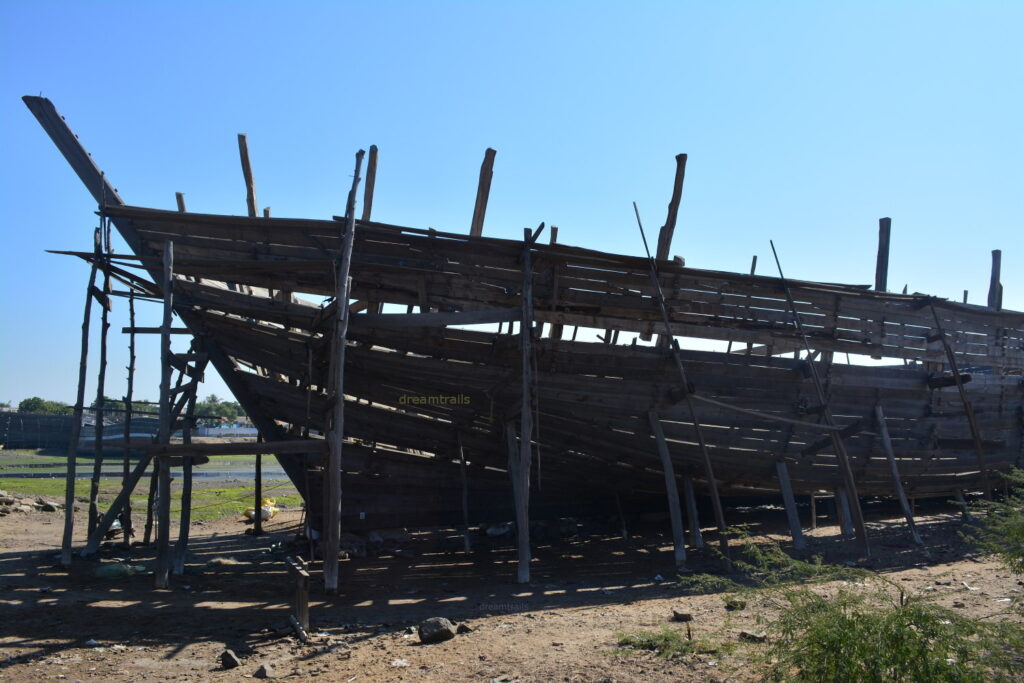
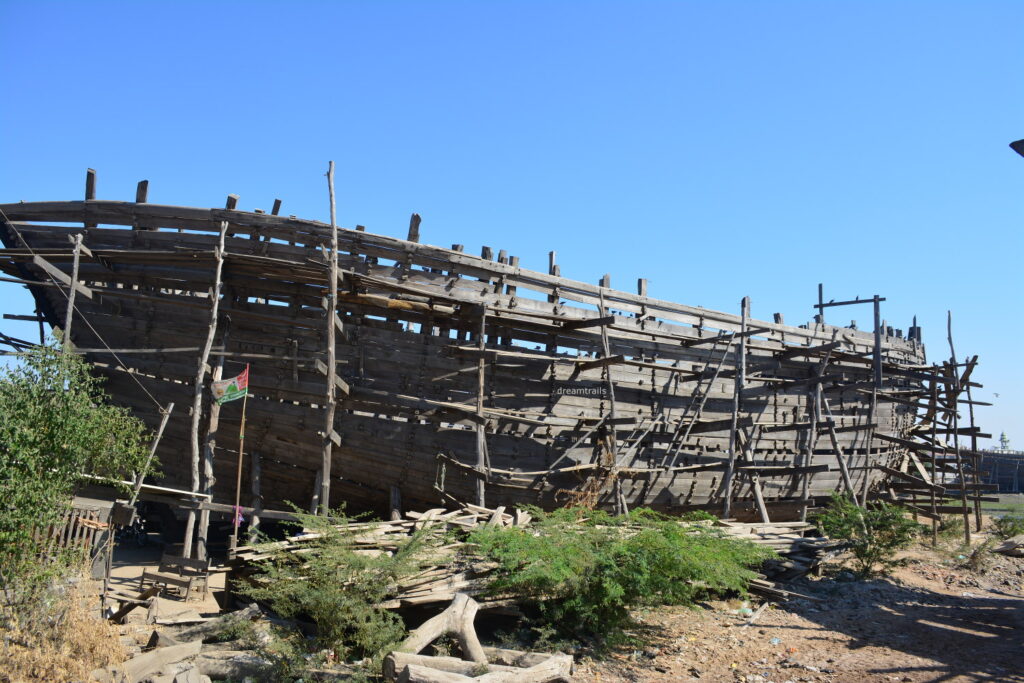
A visit to the shipbuilding yard is unlike visiting a typical tourist attraction. As you approach the coastline, you may notice enormous wooden structures rising directly from the sand — partially completed ships resting on sturdy supports.
Depending on when you visit, you might see:
- Skeleton frameworks of ships taking shape
- Massive wooden ribs forming the hull
- Workers carefully fitting wooden planks together
- Different stages of construction happening simultaneously
The scale of these vessels often surprises first-time visitors. Standing next to a half-built dhow gives a real sense of how significant Mandvi’s maritime trade once was — and how impressive the craftsmanship continues to be even today.
A Personal Experience at the Yard
Walking through the shipbuilding area feels like stepping back in time. Watching artisans shape timber using traditional techniques makes you appreciate the patience and skill involved in creating something so enormous entirely by hand.
The smell of freshly cut wood, the rhythmic sound of tools striking timber, and the sight of giant ships slowly taking form create an experience that feels both raw and authentic. It is one of those unexpected moments in Mandvi where history doesn’t feel preserved in a museum — it feels alive.
Is the Shipbuilding Yard Open to Visitors?
The shipbuilding yards are working industrial spaces, not officially developed tourist sites. Visitors can usually observe the ships from nearby public areas, but it is important to be respectful of the workers and their workspace.
A few things to keep in mind:
- Avoid entering restricted areas without permission.
- Ask before photographing workers.
- Maintain a safe distance from construction activity.
- Visit during daylight hours for better visibility.
Because it remains an active workplace, the experience feels genuine rather than commercialized.
Why This Experience Is Unique
In an era dominated by modern shipyards and automated manufacturing, Mandvi’s dhow construction represents a rare survival of traditional maritime craftsmanship. Very few places in the world still build large wooden vessels using largely manual methods.
The shipbuilding yards highlight an important aspect of Mandvi’s identity — not just as a beach destination, but as a historic trading town shaped by the sea.
For travelers interested in culture, history, or craftsmanship, this is easily one of the most memorable experiences in Mandvi.
Tips for Visiting
- Combine your visit with Mandvi Beach, which lies nearby.
- Morning or late afternoon offers better light for photography.
- Wear comfortable footwear suitable for sandy terrain.
- Respect the workspace — remember this is a functioning shipyard.
How to Include This in Your Mandvi Itinerary
A short visit to the shipbuilding yard can easily be added alongside other attractions in Mandvi. Spending even 20–30 minutes here provides a deeper understanding of the town’s maritime roots and adds a unique cultural dimension to your trip.