

Hidden in the vast salt desert of Gujarat lies one of India’s most fascinating archaeological sites: Dholavira. Located on Khadir Bet island in the Great Rann of Kutch, this ancient city once thrived as a major center of the Indus Valley Civilization, one of the world’s earliest urban cultures.

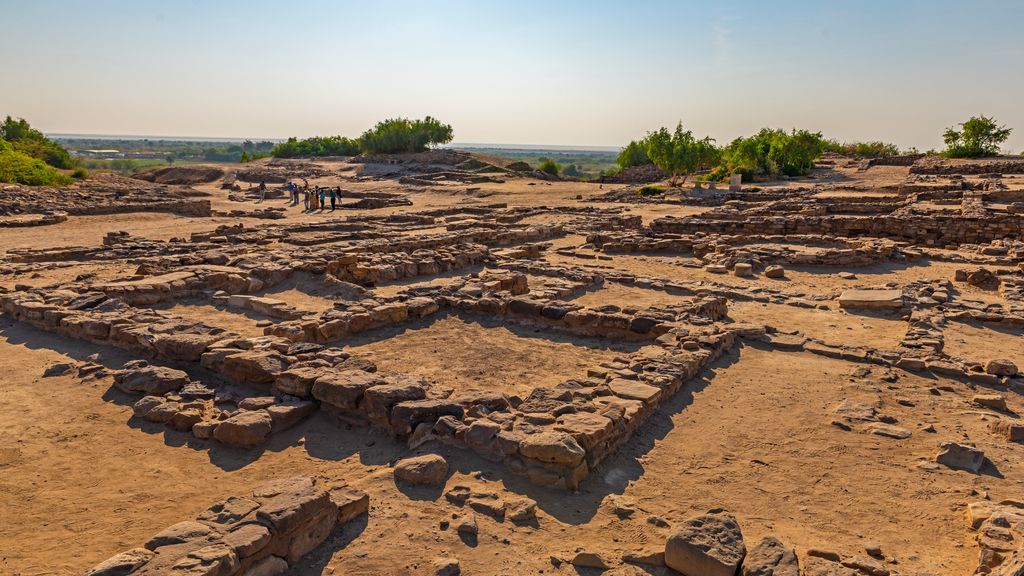
Today, its ruins reveal a remarkable story of engineering, trade, and urban planning that flourished over 4,000 years ago.
Discovery of the Ancient City
Dholavira was discovered in 1968, and extensive excavations were conducted between 1989 and 2005 by archaeologists.
The site covers around 47 hectares and represents one of the largest and best-preserved cities of the Indus Valley Civilization.
In 2021, its historical importance was internationally recognized when UNESCO declared Dholavira a World Heritage Site.
A City Built with Advanced Planning
What makes Dholavira extraordinary is its sophisticated urban design. The city was divided into three main sections:
- Citadel (upper city) – the administrative and elite area
- Middle town – likely home to important officials and merchants
- Lower town – residential areas for the wider population
Massive stone walls surrounded these sections, showing the careful planning of the settlement. Streets and buildings were arranged in an organized layout, reflecting a structured society.
Ingenious Water Management
Perhaps the most impressive feature of Dholavira is its water conservation system.
The city stood in an extremely dry region with very limited rainfall. To survive, the inhabitants constructed:
- Large stone reservoirs
- Sophisticated drainage systems
- Channels that captured water from nearby seasonal streams
These systems stored precious rainwater and allowed the city to flourish in harsh desert conditions.


Even today, these reservoirs remain one of the best examples of ancient water engineering.
Trade, Craft, and Daily Life
Excavations have uncovered a wide range of artifacts that show Dholavira was a thriving center of trade and craftsmanship. Archaeologists have found:
- Bead-making workshops
- Jewelry made of semi-precious stones
- Copper and shell artifacts
- Terracotta objects and tools
These discoveries suggest that the city traded with other Harappan settlements and possibly even with distant regions like Mesopotamia and Oman.
The Mystery of the Harappan Signboard
One of the most intriguing discoveries at Dholavira is a large Indus script signboard found near the city’s entrance.
The sign contained ten large symbols, making it one of the longest inscriptions discovered from the Indus Valley Civilization. Though researchers have studied it extensively, the Indus script remains undeciphered, leaving its exact meaning unknown.
Decline of the City
Like many other Indus Valley cities, Dholavira eventually declined. Archaeological evidence suggests that climatic changes and decreasing rainfall may have gradually made life difficult in the region.
Over time, the population moved away, leaving behind the silent ruins we see today.
Why Dholavira Matters Today
Dholavira provides an extraordinary window into one of humanity’s earliest urban societies. Its architecture, water systems, and artifacts reveal a civilization that was remarkably advanced for its time.
Today, the site stands as a reminder that ancient India was home to one of the world’s earliest and most sophisticated civilizations.

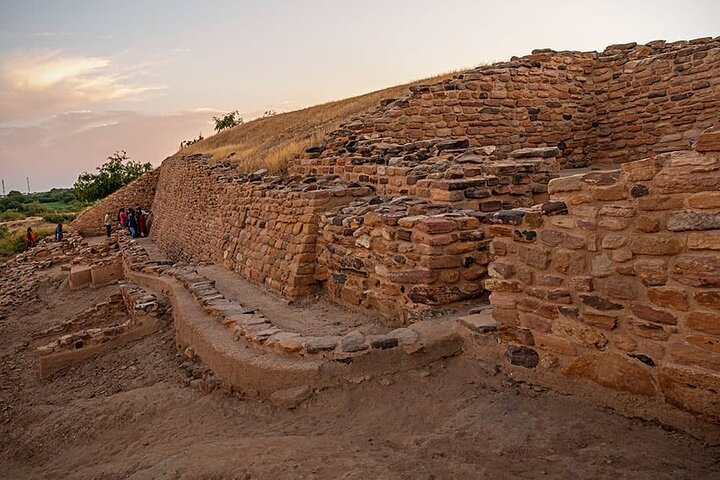
Walking through its ruins, visitors can imagine a city that once thrived in the middle of the desert thousands of years ago.
Visiting Dholavira
Although it lies in a remote part of the Rann of Kutch, Dholavira is accessible to travelers who want to explore one of the most remarkable sites of the Indus Valley Civilization.
The archaeological site is located on Khadir Bet island in the Great Rann of Kutch, about 220 km from Bhuj, the largest nearby city. Most visitors reach Dholavira by road from Bhuj, which has the nearest airport and railway connections.
The drive itself is part of the experience. As the road crosses the salt flats and desert landscapes of the Rann, the surroundings gradually become more remote and dramatic.
Best time to visit
The best months to visit Dholavira are:
- November to February – pleasant weather and clear skies
- December–January – ideal if combining the trip with the Rann Utsav
Summer temperatures in the region can exceed 45°C, making travel difficult during the hotter months.
What to see at the site
Visitors can explore several important parts of the ancient city, including:
- the citadel and fortified walls
- the large stone reservoirs and water channels
- residential and ceremonial structures
- the Dholavira Archaeological Museum, which displays artifacts found during excavations
Walking through the ruins gives a rare glimpse into how a sophisticated urban civilization lived more than four millennia ago.
Planning a trip to Kutch
Dholavira is often visited as part of a broader journey through the Kutch region of Gujarat, which is known for its desert landscapes, wildlife sanctuaries, and traditional villages.
If you’re planning a trip, see our complete guide to exploring Kutch for information on transport, accommodation, and other places to visit in the region.
Quick Facts About Dholavira
| Fact | Information |
|---|
| Location | Khadir Bet island, Great Rann of Kutch, Gujarat, India |
| Civilization | Indus Valley Civilization (Harappan Civilization) |
| Age | About 4,500 years old |
| Discovery | Discovered in 1968 by archaeologist J. P. Joshi |
| UNESCO Status | Declared a UNESCO World Heritage Site in 2021 |
| Nearest City | Bhuj (around 220 km away) |
| Best Time to Visit | November to February |
| Known For | Advanced water reservoirs, stone architecture, Harappan signboard |